From Basic PLC Simulation to Industrial-Grade Door Control Logic
🚪 From Basic PLC Simulation to Industrial-Style Control Logic
I recently developed a Door Control System using LogixPro Simulator based on RSLogix 500 (Allen-Bradley). Rather than stopping at a basic “it works” solution, I pushed the design toward real industrial standards.
LogixPro is a straightforward simulation tool that allows users to test different scenarios, implement control logic, and evaluate system behavior under various conditions. It is easy to configure, making it a practical and cost-effective platform for learning and validating PLC concepts.
This project evolved from a simple simulation into a structured, modular, and fault-tolerant control system—closely reflecting real-world automation practices found in industrial environments.
The software is currently unavailable for download. The developer is working on an improved version, which will be shared here once it becomes available:
🔧 System Architecture
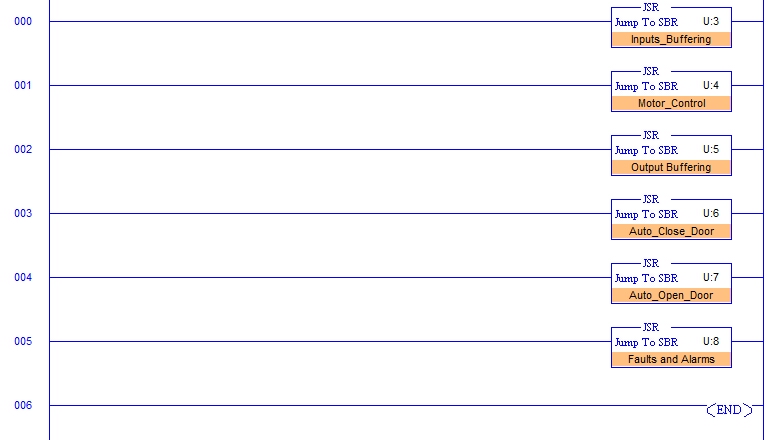
The program was divided into modular subroutines:
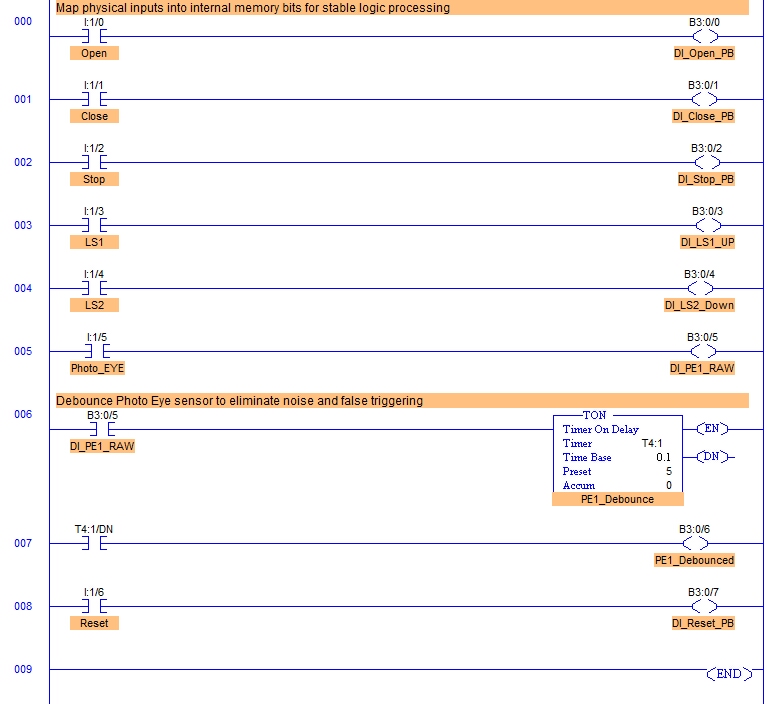
• Input Buffering (with debounce filtering)
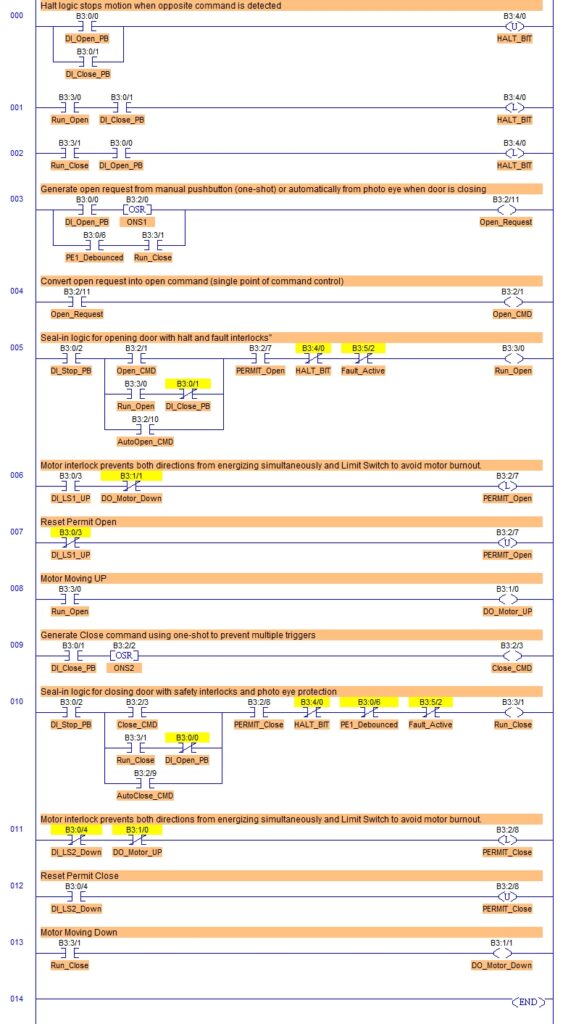
• Motor Control with seal-in logic and interlocks
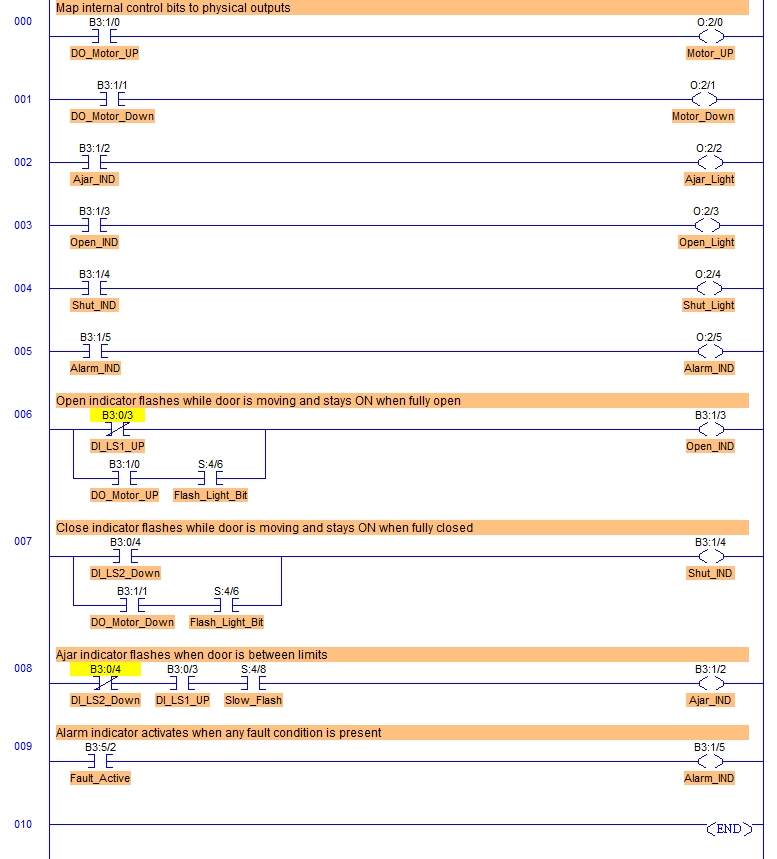
• Output Buffering (clean separation of logic vs outputs)
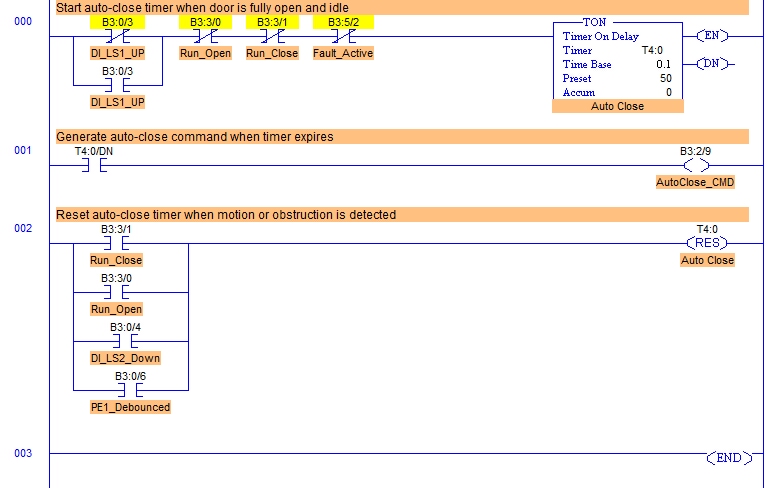
• Auto Close / Auto Open sequences
• Fault Detection and Alarm Handling
This structure improves readability, troubleshooting, and scalability.
⚙️ Key Industrial Features Implemented
• Debounced Photoeye Sensor
→ Eliminates noise and false triggers using TON logic
• Motor Interlock Protection
→ Prevents simultaneous UP/DOWN energization (critical safety)
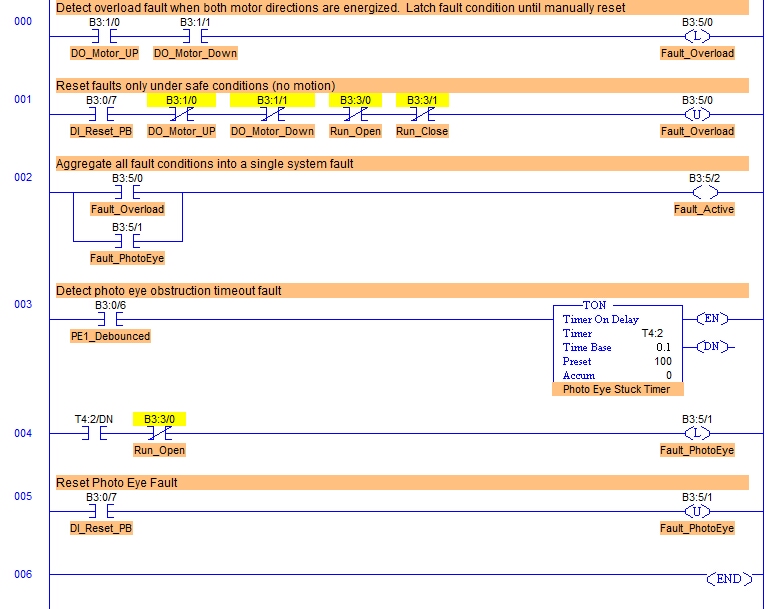
• Fault Detection (Multiple Conditions)
→ Motor overload (both directions active)
→ Photoeye stuck detection (timer-based)
→ Aggregated fault logic
• Fault Latching with Manual Reset
→ Faults persist until operator intervention
• Permit Logic (Industrial Standard)
→ OPEN and CLOSE commands require permissive conditions
→ Prevents unsafe or invalid operations
• Seal-in Logic for Motion Control
→ Maintains motor command until stop condition occurs
• Auto-Close Functionality
→ Timer-based automatic closing after door is open
• Anti-Reverse Protection
→ Prevents immediate direction change to protect mechanical components
• Output Buffering Strategy
→ Internal logic separated from physical outputs (clean architecture)
🧠 Engineering Takeaways
This project reinforced a key concept:
“Good PLC logic is not just about making it work — it’s about making it safe, predictable, and maintainable.”
Key lessons:
• Always separate inputs, logic, and outputs
• Use timers not just for delays, but for protection and validation
• Implement fault handling as a first-class feature
• Design with maintenance and troubleshooting in mind
📈 What Makes This “Industrial-Level”
This is no longer simple ladder logic.
The system includes:
• Structured programming (modular SBR design)
• Deterministic behavior using buffered logic
• Safety-oriented design (interlocks + fault handling)
• Real-world sensor conditioning (debounce + validation)
More industrial automation content coming soon — focused on PLC logic, troubleshooting, and real-world control systems.
LogixPro Simulator Door
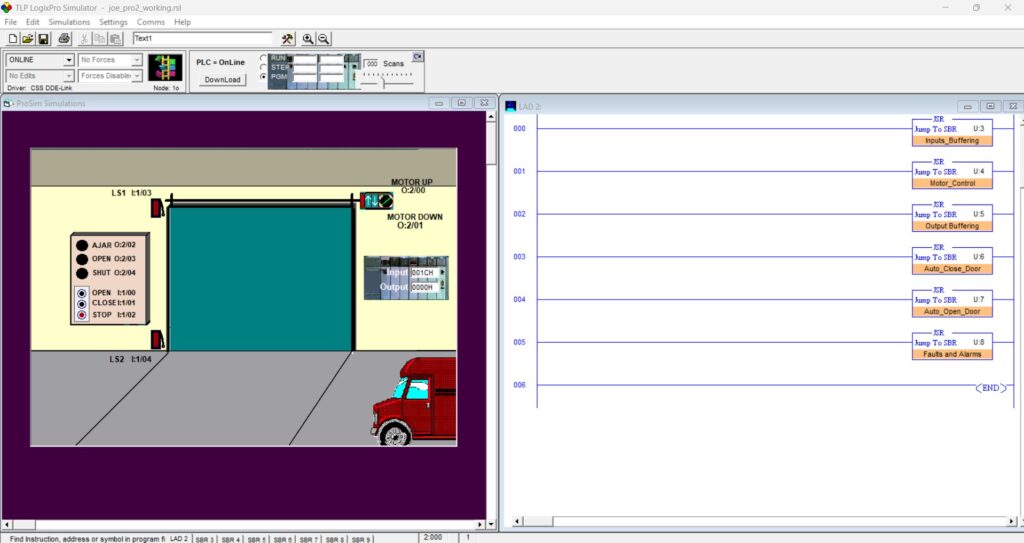
LAD 2
SBR 3
SBR 4
SBR 5
SBR 6
SBR 7

SBR 8